Shards’ Whispers
Sometimes I really crave for a visit to the composer’s head…
This article is a submission to the biannual journal of the wind band of the student art troupe of Tsinghua University; December 2023, No. 60.
Edited from a machine-assisted translation from Chinese.
At times I really want to crawl into a composer’s mind, to see what kind of mountains the music once melted upon, what lands it flowed across, before it finally dried on the white paper before my eyes.
Whose glory is that? What was the last unicorn thinking as it fell? What legends did the ancient heroes leave behind in their epics?
In the rehearsal room, I hear the conductor’s interpretation of the music; on stage, I hear the players’ understanding of its expression. But when I turn my gaze toward the music itself — squeezing through the narrow path called the programme note, passing beneath the lines and grids, peering inward through those pupil-deep dots and squares — it remains silent. “Do not ask me where I come from.” And so I fall silent as well, looking away, speaking of other things.
“Every town has something typical, something special […] With this march I have tried to set that pearl of the city to music.”
Following these words, the vibrations around me pull me into the square of a European town. Earth-yellow brick houses surround me; residents on the third floor fling open their windows, calling out cheerfully to a small street band below. I pass a fountain, a statue, a tree, expecting light and openness around the next corner. — But is this really the town the composer had in mind? Does the composer carry within them a specific town? Do the deepest layers of the notes reflect a small fountain in some forgotten corner of the Netherlands decades ago? Or is the music made purely of fragments — cross-sections of many towns — assembled into an “invisible city”?
Of course, I could choose not to care. Even the teaching building in my mind looks different from everyone else’s; how much more so a European town. Each person’s eyes and ears catch different tints of the pearl — why trouble myself with elusive details from an unknown corner thousands of miles away? Conductor M also says that it doesn’t matter whether it’s a hero or a fool; as long as you play with emotion and story, the music will gain its tension.
But I do care. Sometimes I feel that when I resonate with a piece of music, I am no longer myself. I fall in love with a fragment of the world, longing to see all of it, to understand every crack it bears and every ray of light it refracts — like a soul yearning to dance fully with the soul it loves. We are all crystallizations of the world. I want to sit knee to knee with this shard in the night, sharing its journeys and secrets, my joys and worries, in whispered conversation — instead of treating it as a passing guest. The music moves me, moves the audience — but where does this force come from, and what shape does it ultimately take? Who were the people who carried it here? Does it have something it wants to say to me? I don’t know, and I’m unwilling to leave it at that.
BWV 961, a little fugue with no title and no story, is for me filled with scents: the lonely tedium between black and white keys; a faint waft of cake in the air; childhood separation anxiety; a cold, damp winter soaked with tears. Bach clearly wasn’t clutching a hot-water bag and sobbing when he wrote it — so where was he, what was he going through, what thoughts filled his mind? Perhaps we will never know, at least not until a time machine is invented.
There is an album I love. Even though every piece on it has lyrics, I still don’t know what story each song is telling, nor even the meanings of several titles. I scoured the internet and found an interview with the artist, who merely said that the album title “is a number meaningful to this collaboration,” and that “I think letting go of preconceptions helps you enjoy the album, so please do try to use your imagination.” But we’ve met so many times already, my dear pieces — I want to see you more fully now. I stare at these silent shards as the chill of disillusionment washes over me. In the end, I can only turn away.
Fragments of music drift through the universe, surrounded by endless void. The wind they blow plucks me, yet something always feels missing. Are the stories behind music truly so ineffable? I have my own interpretations and performances, of course — but must I really be content with watching only their shadows?
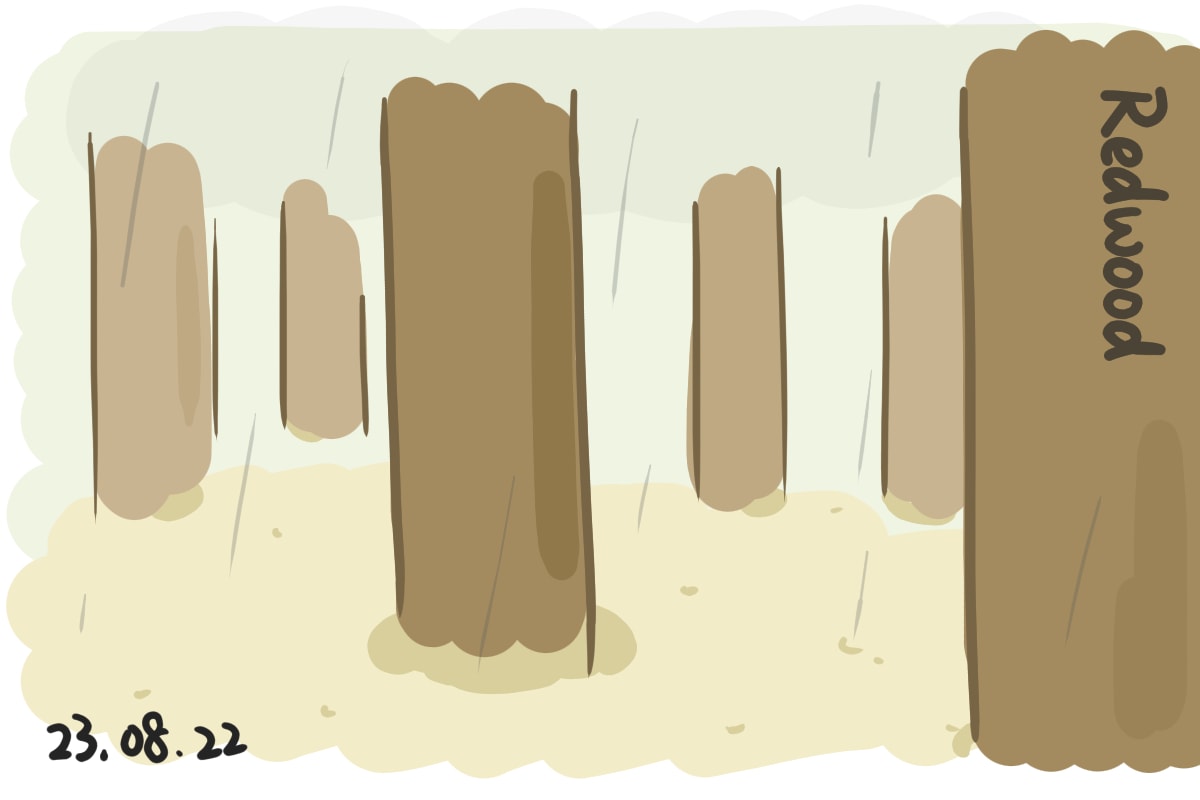
Thankfully, “Pine River” and “Redwood” are concrete enough to anchor the design of the summer camp postcard. The school named after Pine River lies among the running waters and fertile land of northern Michigan; the image of the redwood comes from the conductor’s love of the outdoors and the composer’s childhood memories colliding with California’s sequoia forests. Thankfully, ABBA’s songs have lyrics — everyone pictures that dazzling girl who is forever seventeen, sparing me from staring at the score and rambling internally during section rehearsals. Still, when the next piece begins, I suspect I’ll once again be searching alone and in vain for answers that can never be known.

悠哉悠哉,辗转反侧。
“Endless, endless thoughts. Tossing and turning, back and forth.”
— Though Conductor B’s metaphors often leave one momentarily blinded, this interpretation of the middle section of 六口茶 (Six Sips of Tea) blew away the leaf that had been blocking my view. I had always thought the flugelhorn depicted verdant landscapes, or an interlude in a love story. Yet this single metaphor jolted me awake: it is about longing unmet, waking and sleeping in yearning! I had been blinded for too long by the tension of the soli, never imagining such a reading. At that moment, all the entanglements behind the music suddenly ceased to matter. Without hesitation, I draped the piece in the shades of a moonlit night — and never doubted it again. Perhaps, by chance, I had connected with the music’s secret. Or perhaps I simply wandered down a mistaken path, abandoning my own equally shimmering imaginings. Who knows?
Perhaps what we see, hear, and think shapes our impressions and beliefs even as it destroys them — like Calvino’s city of Pyrrha, where seeing the city as it truly is erases one’s freedom of imagination. It took me a long time, in my ignorance, to realize that next to l’orangerie was actually a museum; and suddenly my understanding of the second movement of Petit Paris shifted — from a sweet orange greenhouse to quietly displayed Impressionist paintings against white walls. I could no longer recover that alluring vision of golden fruit under golden sunlight.
Seen this way, perhaps a little mystery isn’t such a bad thing. Ah — whatever happens, happens.
“[…] the city must never be confused with the words that describe it. And yet between the one and the other there is a connection.” A story behind the music cannot replace one’s own experience of it — but if we are to experience it ourselves, we cannot be utterly indifferent to the deeper meanings behind the notes. Is that fountain in the corner of the composer’s mind important? If it truly exists, then yes, it is very important. But if no answer can be found, perhaps I should slow my searching steps. After all, neither do I know where I come from or where I’m going; neither do I know what land I spring from, or from what I was born. Let the shard remain a shard. Walk with it as it finds ways to complete itself; give it what it lacks; teach it my own language. Perhaps then the grids and dots on the page will open into whispers meant only for two fragments.
I pick up the shard and give it a shake — it seems to tell me that the unicorn never fell, and is wandering through every invisible city in the world!
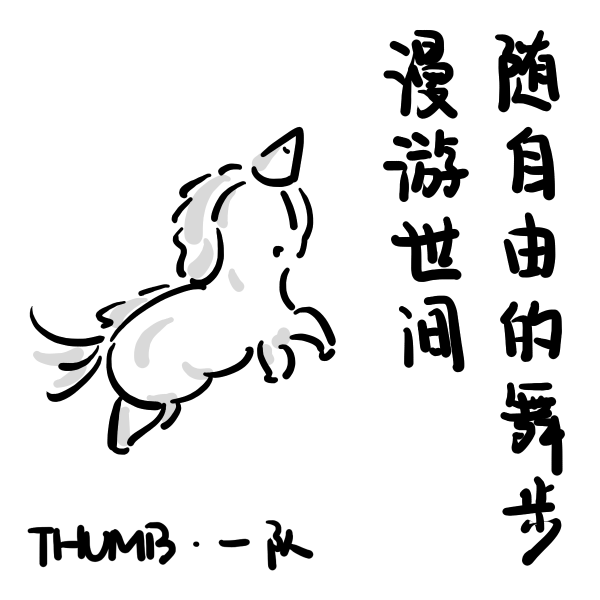
“Roaming the world on unfettered dancesteps”
Relevant works mentioned:
- In All Its Glory (James Swearingen)
- Cry of the Last Unicorn (Rossano Galante)
- Legend of the Ancient Hero (Benjamin Yeo)
- Pearl of the City (Harm Evers)
- Pine River Trilogy (Ed Huckeby)
- Redwood (Ryan George)
- ABBA Gold (arr. Ron Sebregts)
- 六口茶 Six Sips of Tea (arr. 陈丹)
- Petit Paris (Kees Vlak)
